
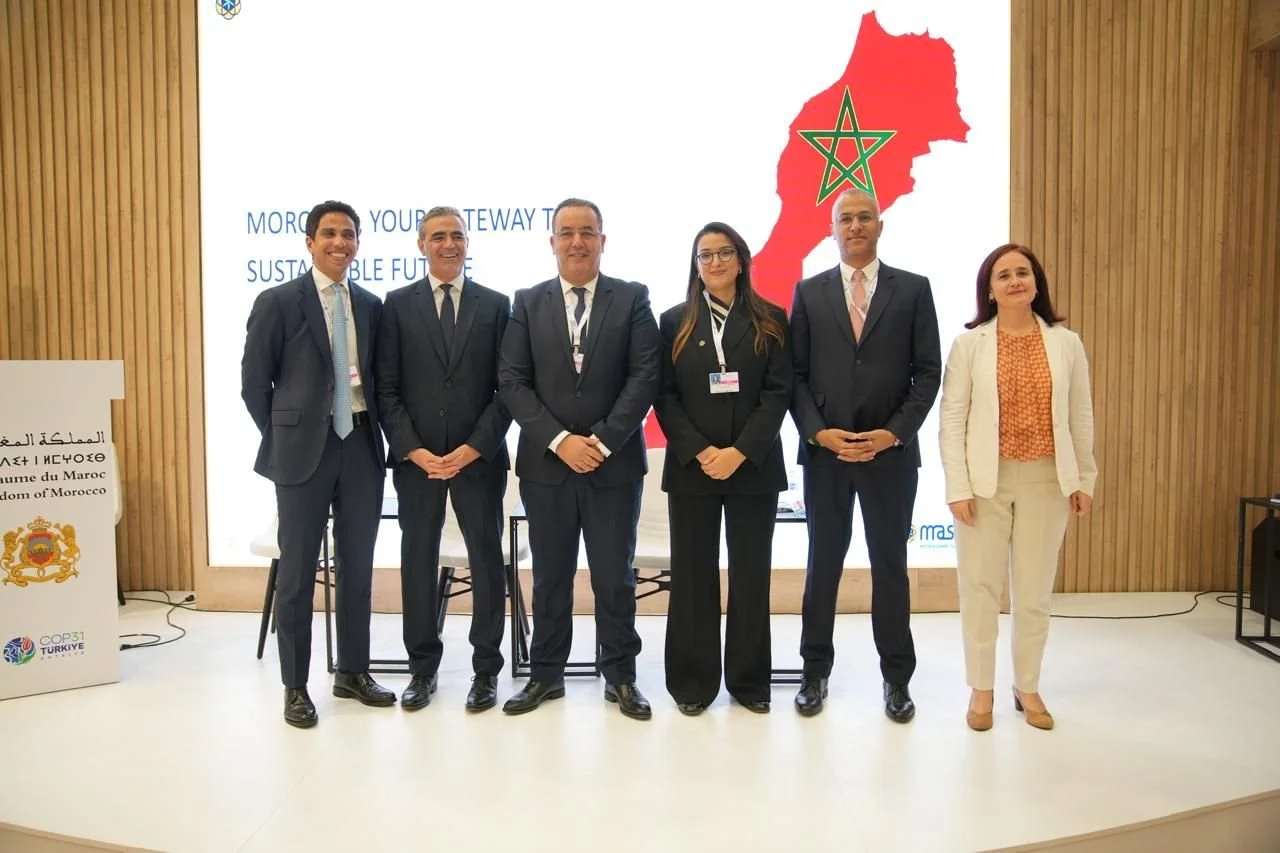
Morocco’s sustainable energy agency, MASEN, presented progress on six green hydrogen projects at COP31 in Antalya, Türkiye, highlighting how developers could share infrastructure and work with international industrial partners.
At a November 10 event at the Morocco Pavilion, MASEN said the six projects it highlighted were underway across three regions. Moroccan energy developer Nareva outlined two large-scale projects in Dakhla and Guelmim, while discussions focused on opportunities for industrial and commercial partnerships.
The six projects were selected in March 2025 under Morocco’s Green Hydrogen Offer, a national program that sets out how investors can secure land and develop projects for domestic and export markets. The government put their combined projected investment at MAD319 billion and identified ammonia, industrial fuels, and green steel as planned outputs. In September 2025, the program’s steering committee authorized the signing of preliminary land reservation agreements for the projects.
Shared infrastructure was a central topic in Antalya. Morocco’s government has called for coordinated planning of power, port, and desalination infrastructure so these facilities can come online in step with hydrogen project development.
MASEN also presented its operating and planned renewable energy projects at a separate decarbonization session organized by Morocco’s Ministry of Energy, Mines and Sustainable Development. The portfolio supports Morocco’s goal of raising renewables to more than 52% of installed electricity generation capacity by 2030.
What will the six projects produce?
Green hydrogen is made by using renewable electricity, such as wind or solar power, to split water into hydrogen and oxygen. The hydrogen can then be used to make ammonia, a key ingredient in fertilizer, or to turn iron ore into iron for steelmaking. Those uses explain why Morocco’s Green Hydrogen Offer brings together power developers and industrial companies.
Five investor groups were selected in March 2025 to develop the six projects across three regions. At the Morocco Pavilion on November 10, Moroccan energy company Nareva presented its two large-scale developments in Dakhla and Guelmim. Its plans span ammonia, industrial fuels, and green steel.
The government identified the ORNX consortium, which includes Ortus, Acciona, and Nordex, and a partnership between United Energy Group and China Three Gorges as prospective ammonia producers. TAQA and Cepsa plan to produce ammonia and industrial fuels, while ACWA Power is targeting green steel.
Who is developing the projects?
Five investor groups were selected in March 2025 under the Green Hydrogen Offer. Nareva’s plans cover ammonia, industrial fuels, and green steel. The ORNX consortium, made up of Ortus, Acciona, and Nordex, is targeting ammonia, as is the partnership between United Energy Group and China Three Gorges. TAQA and Moeve, named as Cepsa in the original government announcement, plan to produce ammonia and industrial fuels. ACWA Power is targeting green steel. The draft finance bill gives regional totals without providing a full breakdown of each developer’s site and planned capacity.
Where the projects stand
The first preliminary land reservation contracts have been signed and early engineering studies have begun, according to the draft finance bill. The most advanced projects are being prepared for more detailed studies. Those studies will help determine how the projected investment is allocated across the portfolio.
Shared infrastructure was a central topic at COP31 because the production plants depend on facilities that can take years to build. Electrolyzers need a reliable supply of renewable electricity and treated water. Ammonia exporters also need storage tanks and port terminals equipped to load the product onto ships. Morocco’s government has called for power, desalination, and port infrastructure to be planned together so that those facilities are ready when the plants need them.
The commercial question is who will buy the output and on what terms. Long-term purchase agreements can give developers the revenue certainty they need to commit capital. The International Energy Agency says only about one-fifth of the volume covered by new low-emissions hydrogen purchase agreements worldwide in 2025 was backed by firm commitments. For the six projects highlighted in Antalya, firm buyer agreements, completed engineering studies, and decisions on shared infrastructure are the milestones that will show how close the portfolio is to construction.
