
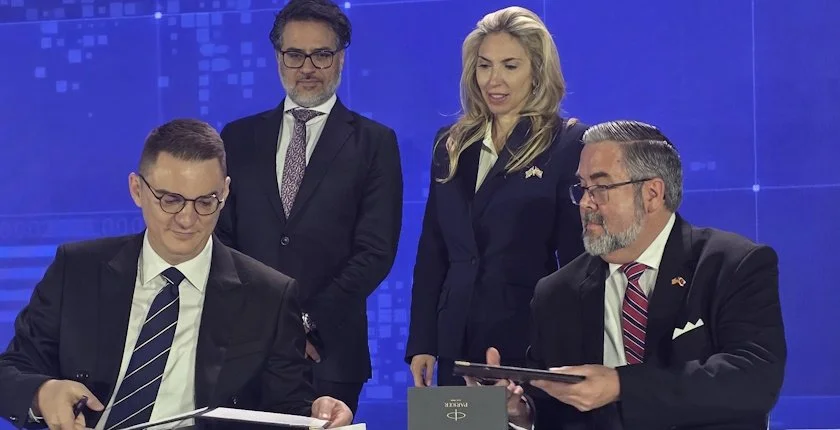
Montenegro and the United States have signed a memorandum of understanding in Warsaw to cooperate on electricity and gas infrastructure, including the proposed Ionian Adriatic Pipeline. Montenegro’s Ministry of Energy and Mining said the agreement aims to make energy supplies more reliable and attract investment in projects that connect the country with other markets in Southeastern Europe.
The two governments signed the memorandum at a meeting of the Partnership for Transatlantic Energy Cooperation (P-TEC). The ministry singled out the pipeline for its potential to give the region access to a wider range of gas suppliers and transport routes. For Montenegro, the project could strengthen its role in the Adriatic gas market. The ministry’s announcement gave no financing commitment or construction timetable for the pipeline.
US and Japanese energy talks
Montenegro’s Minister of Energy and Mining, Admir Šahmanović, and the head of the ministry’s Directorate for Oil and Gas, Zorana Sekulić, met with US Department of Energy officials Dan Byers and Arlene Fetizanan, US Chargé d’Affaires in Montenegro Michael Keays, and representatives of Japanese energy company JERA.
The discussions focused on where US and Japanese partners could participate in Montenegrin energy projects. The ministry said the talks covered investment in infrastructure that could improve the long-term reliability of the country’s energy system. Šahmanović also met separately with international companies interested in Montenegro’s energy sector to discuss prospective projects and investment opportunities.
Cross-border links on the regional agenda
Šahmanović also held talks in Warsaw with his counterparts from Greece, Croatia, Bosnia and Herzegovina, North Macedonia and Bulgaria. Their discussions covered joint infrastructure projects and closer links between national energy systems and markets.
For Montenegrin households and businesses, the ministry said, the intended benefit of stronger cross-border links is a more dependable energy supply. For the government, the Warsaw talks also served a commercial purpose, bringing potential investors into discussions about the projects Montenegro wants to develop.
