
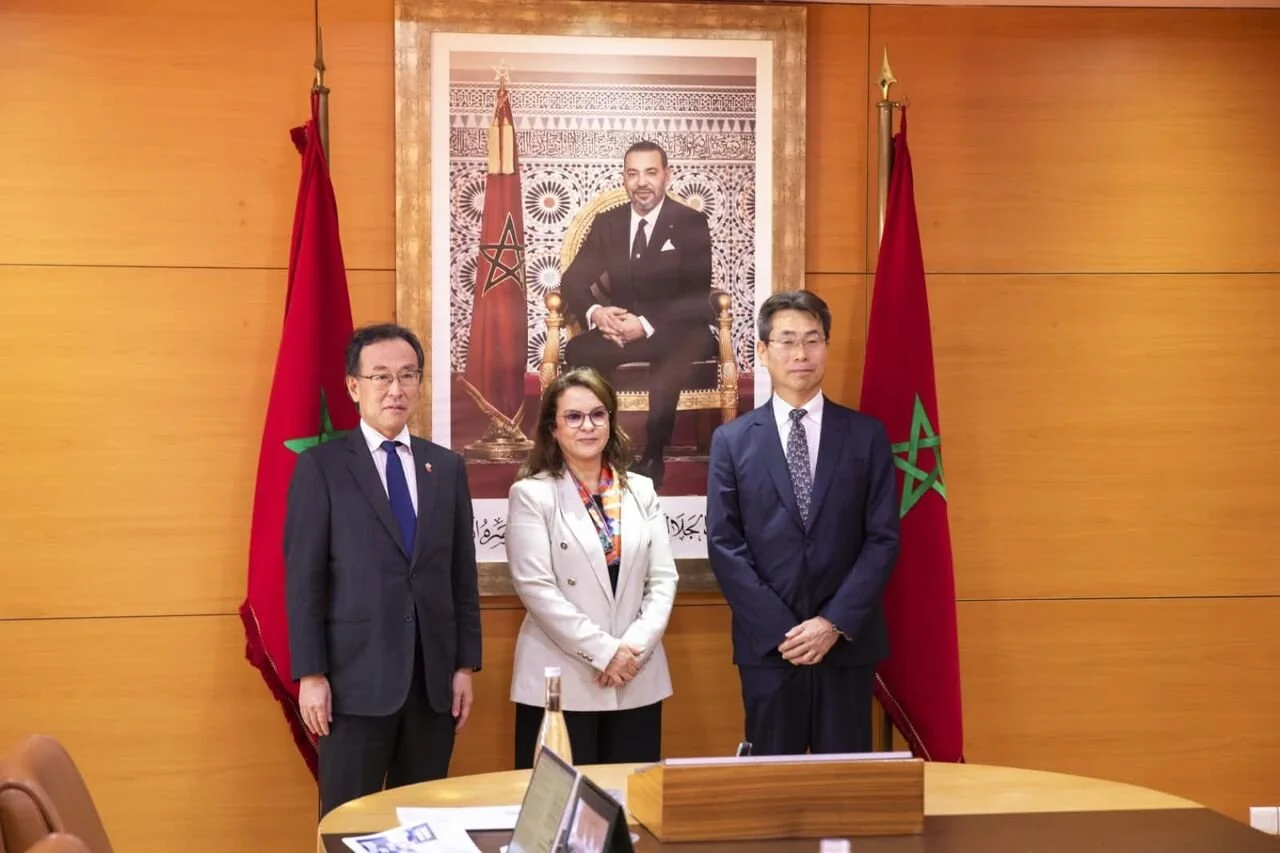
Morocco and Japan are exploring opportunities to expand cooperation in renewable energy, infrastructure and low-carbon technologies following talks between Morocco’s Minister of Energy, Mines and Sustainable Development, Charafat Afailal, and a Japanese delegation led by Yoshimasa Uno, special adviser to Japan’s prime minister.
According to the Moroccan ministry, the two sides also discussed natural resources and climate resilience and reviewed ongoing initiatives with Japanese institutions. Afailal called for the partnership to move toward concrete projects, pointing to Japan’s technological expertise and Morocco’s position as a base for reaching African markets.
Earlier agreements identify areas for investment
In November 2024, the Japan Bank for International Cooperation (JBIC) signed a memorandum of understanding with Morocco’s energy ministry to expand opportunities for Japanese companies and explore financing for energy transition projects. A year later, JBIC signed a separate memorandum with TAQA Morocco covering potential collaboration in renewable power generation, electricity transmission, seawater desalination, water transfer and green hydrogen.
Climate resilience is also an established area of cooperation. In September 2025, the Japan International Cooperation Agency and the Moroccan government agreed to work on a plan to manage sediment buildup in dam reservoirs, helping preserve water storage capacity
Morocco’s 2035 climate goals frame the talks
Afailal highlighted Morocco’s 2035 climate objectives during the meeting. Under its latest Paris Agreement pledge, Morocco aims to reduce greenhouse gas emissions by 53% below projected business as usual levels by 2035. The pledge includes a 21.6% unconditional reduction and a further 31.4 percentage points conditional on international support.
The ministry’s account focused on areas for cooperation and a review of existing initiatives. For developers and investors, the next indication of progress will be whether the two sides identify specific projects, financing partners or procurement opportunities.