
Morocco and Mauritania have completed studies for a proposed 400 kV electricity interconnection between Dakhla and Boulenouar. The high-voltage line would allow the two countries to trade power across their border, giving each grid an additional source of electricity when demand rises or domestic generation falls. Securing financing is the next major step for the project.
Morocco’s ambassador to Mauritania, Hamid Chabar, announced the completion of the studies on November 16, 2026, at the opening of the third edition of Morocco Week in Nouakchott. The announcement followed a late-August progress review by Morocco’s Ministry of Energy, which had expected the studies to be completed before December.
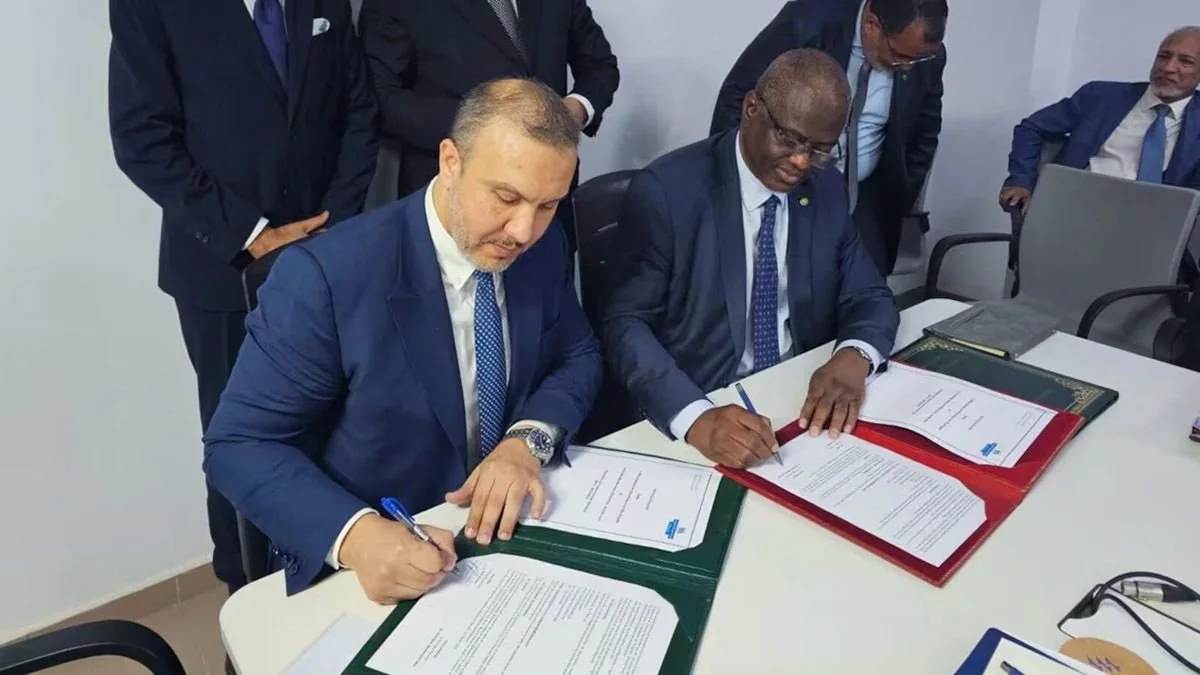
The project stems from a memorandum of understanding signed by the two countries in January 2025. On February 4, 2025, Morocco’s National Office of Electricity and Drinking Water (ONEE) and Mauritania’s national electricity company, SOMELEC, signed an implementation agreement for the interconnection. The completion of the studies marks the latest milestone in the utilities’ joint work on the Dakhla–Boulenouar corridor.
How cross-border electricity trade could work
The practical value of the line lies in the fact that electricity supply and demand can differ on either side of a border. If demand peaks in Mauritania while Morocco has power available, Mauritania could import electricity through the interconnection. At other times, available generation in Mauritania could serve Moroccan demand. The direction and volume of trade would depend on conditions in both systems and the arrangements governing exchanges between the utilities.
That flexibility matters for renewable energy. A windy period or several hours of strong solar output can produce more electricity than one grid can absorb at that moment. If demand is higher across the border, the proposed link could give that power a buyer. For the importing system, the same exchange could help cover a peak in consumption or a temporary reduction in local generation.
The proposed 400 kV figure refers to the line’s operating voltage. The announcement did not specify how many megawatts the two utilities expect to be able to exchange, a figure that will help determine the scale of the link’s contribution to security of supply.
Mauritania includes the link in its investment programme
Mauritania’s 2027–2029 Public Investment Programme lists the interconnection at an estimated MRU 1.95 billion. Its inclusion gives the project a place in the country’s medium-term investment planning and provides an initial indication of its expected cost. Financing remains to be secured, and the final cost has yet to be confirmed.
The project’s immediate commercial opportunity is bilateral. ONEE and SOMELEC would gain a route for exchanging electricity along the Dakhla–Boulenouar corridor. Its longer-term significance lies in the possibility of wider trade between North and West Africa, with potential access to European electricity markets. Such trade would also depend on transmission capacity beyond the bilateral link and agreements allowing electricity to move across additional networks.
For now, the completion of the studies and the inclusion of a budget estimate in Mauritania’s investment programme give the project a clearer basis for financing discussions. Securing that funding will determine when the proposed cross-border connection can move toward construction.
