
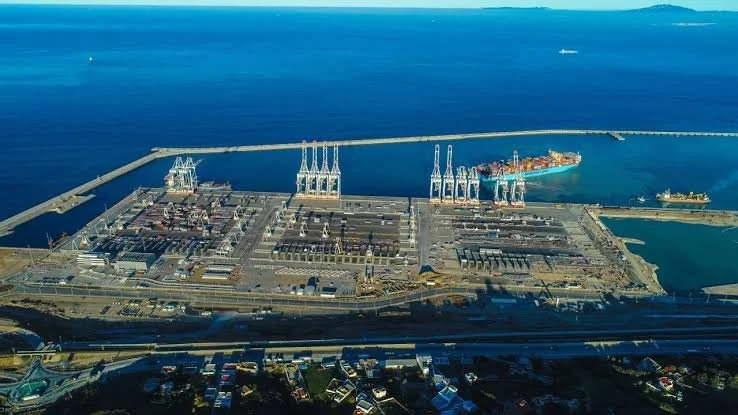
A long-term purchase agreement with Shell brings Morocco’s planned Nador West Med renewable fuels facility closer to international markets, with operations targeted for October 2028.
Shell has signed a long-term agreement to purchase renewable fuels from a planned production facility at Morocco’s Nador West Med port, marking a commercial milestone for the country’s emerging sustainable aviation fuel industry.
The agreement, announced on November 2, involves Shell Trading Rotterdam B.V. and Green Sky Manara LLC. It gives Shell exclusive purchasing rights to approximately 150,000 tonnes of sustainable aviation fuel (SAF) annually, or an equivalent volume of renewable diesel known as HVO. Bionaphtha and biopropane are also included in the arrangement. The plant is scheduled to begin operations in October 2028.
For Morocco, the deal establishes a connection between a new industrial development and an international fuel supplier, creating a route to market for future production.
Richard Jory, Shell’s Executive Vice President of Products Trading, said the agreement supports the company’s efforts to improve customer access to lower-carbon fuels while developing commercially viable and resilient supply chains.
The facility is being developed by Green Sky Capital through its project company. According to the European Bank for Reconstruction and Development (EBRD), the development has an estimated cost of $239 million and is designed to produce up to 200,000 tonnes of SAF per year, making it one of the first commercial-scale facilities of its kind in Morocco and North Africa. We invest in changing lives
The EBRD project description specifies a waste-based production process using Axens’ licensed technology. The plant is intended to convert these feedstocks into aviation fuel meeting European sustainability requirements, supporting the development of a new industrial activity around the recovery and processing of waste materials.
Financing remains under review. The EBRD is considering a loan package of up to $135 million, comprising an $85 million committed tranche and a $50 million uncommitted tranche. Up to $20 million of the proposed financing is expected to come from the Green Climate Fund, while the project is also expected to benefit from a European Union first-loss guarantee.
The development’s potential local contribution extends beyond fuel production. EBRD documentation includes support for a skills development program and a feedstock-sourcing initiative involving women-led cooperatives and aggregators, linking the industrial investment with opportunities in collection, training, and supply services.
For Shell, the Moroccan agreement adds another prospective source to an international SAF supply portfolio that includes arrangements in Pakistan, Malaysia, Thailand, and the United States. The company currently supplies SAF at more than 80 airports across 18 countries.
The agreement could strengthen the project’s commercial foundations by connecting planned production with an established buyer. For Morocco, successful delivery would add a new export-oriented industry at Nador West Med and expand its participation in international renewable fuel supply chains. The next milestones will be securing financing, completing construction, and bringing the facility into operation against its 2028 target.
