
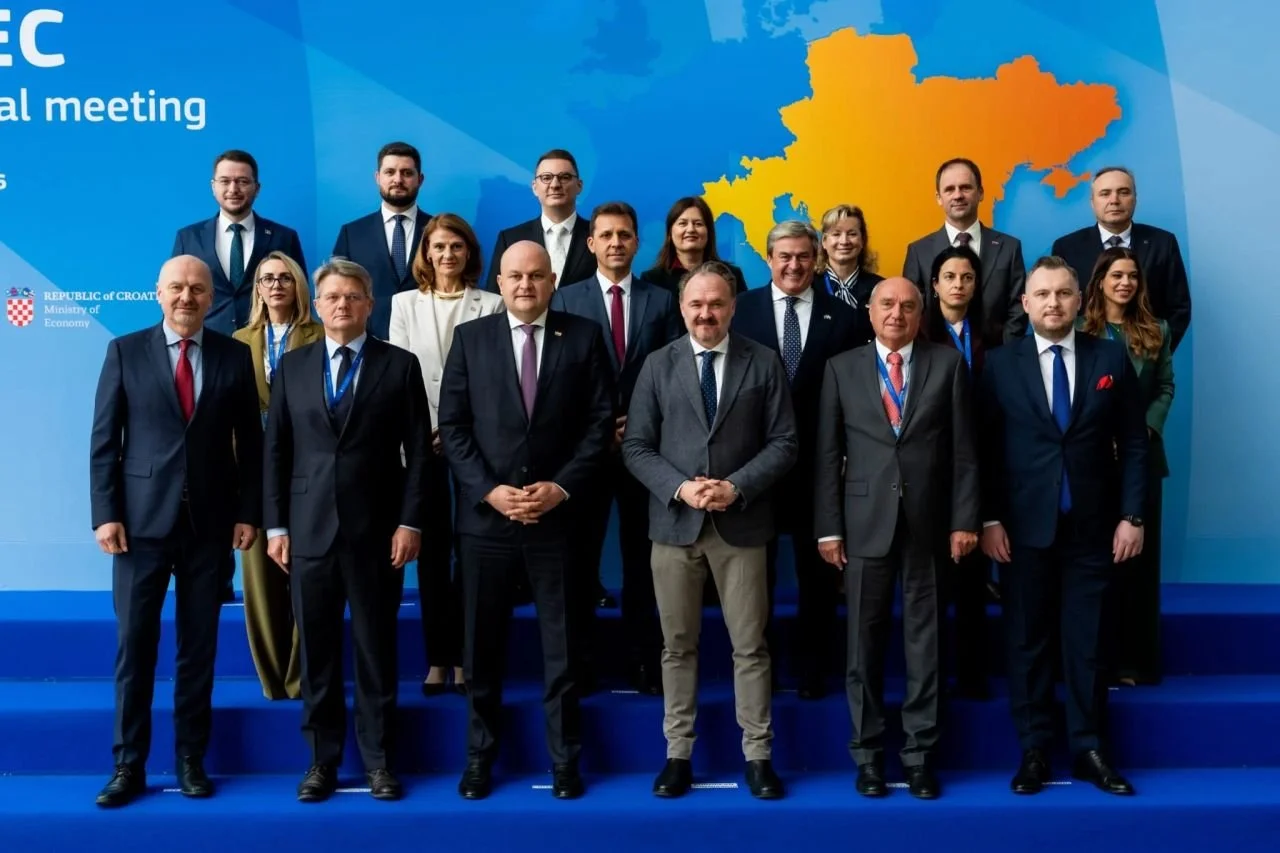
European Commission officials and energy ministers from Central and South-East Europe have reaffirmed their commitment to strengthening regional energy cooperation, advancing cross-border infrastructure and creating the conditions for more secure and affordable energy supplies.
Meeting in Zagreb under the Central and South-East European Energy Connectivity (CESEC) High-level Group, participants adopted updated action plans on electricity, renewable energy and gas. Discussions focused on accelerating strategic projects, improving the use of existing networks and supporting businesses and households facing persistently high energy prices.
The group also officially welcomed Czechia and Poland, expanding cooperation on electricity interconnections, supply diversification and regional energy security.
European Commissioner for Energy and Housing Dan Jørgensen highlighted the importance of combining clean energy deployment and electrification with adequate infrastructure and closer market integration. He said dependence on imported fossil fuels continued to carry financial, security and strategic costs for Europe.
“Now is the time to double down and make sure we have a system that truly delivers secure, clean and affordable energy,” Jørgensen said.
A central priority was strengthening electricity connectivity across borders while making better use of existing infrastructure through smart solutions. Participants also examined the functioning of regional gas markets and measures to improve access to diversified supplies.
The discussions linked infrastructure development with Europe’s wider electrification ambitions. According to the Commission, its Electrification Action Plan, published in July, targets an increase in electricity’s share of energy consumption from 23% to 46% by 2040. Achieving this will require more flexible networks capable of integrating additional clean generation and supporting industrial competitiveness.
Artur Lorkowski, Director of the Energy Community Secretariat, stressed that growing energy demand, expanding renewable capacity and the phase-out of Russian gas made regional infrastructure cooperation increasingly urgent.
He highlighted the importance of common rules and coordinated planning to maximize the use of existing assets and ensure new interconnectors deliver practical supply alternatives. The Trans-Balkan Pipeline offered an example, he said, with more competitive tariffs introduced in October strengthening its role as a northbound route for diversified, non-Russian gas.
Gas connectivity also featured in bilateral discussions between Croatian Minister of Economy Ante Šušnjar and Montenegrin Minister of Energy and Mining Admir Šahmanović. Their meeting focused on the proposed Ionian-Adriatic Pipeline and its potential to open additional supply routes and strengthen connections across the Adriatic region.
Šahmanović said Montenegro’s work to strengthen its legislative and institutional framework was helping create opportunities for strategic partnerships in renewable energy, storage and infrastructure. Šušnjar emphasized the need to translate regional cooperation into the delivery of concrete projects.
North Macedonia’s Minister of Energy, Mining and Mineral Resources, Sanja Božinovska, similarly underlined the role of joint investment and regional connectivity in supporting stable supplies and a competitive economy.
She said construction of North Macedonia’s gas interconnector with Greece was underway, with the Macedonian section expected to be completed by mid-2027. A further interconnector with Serbia is targeted for completion in 2028.
Established in 2015 to strengthen gas supply security, CESEC expanded its remit in 2017 to include electricity and renewable energy. The Zagreb meeting reinforced its role in coordinating infrastructure priorities across EU countries and Energy Community contracting parties, with an emphasis on turning closer cooperation into functioning connections, diversified supplies and new investment opportunities.
