
A Repsol-led consortium plans to begin two seismic surveys off Libya in the second quarter of 2027 as it prepares to explore for oil and gas in deepwater Block 22. Libya’s National Oil Corporation (NOC) outlined the proposed work after its Exploration Department held its first technical meeting with Repsol, Türkiye’s TPAO and Hungary’s MOL on 11 November.
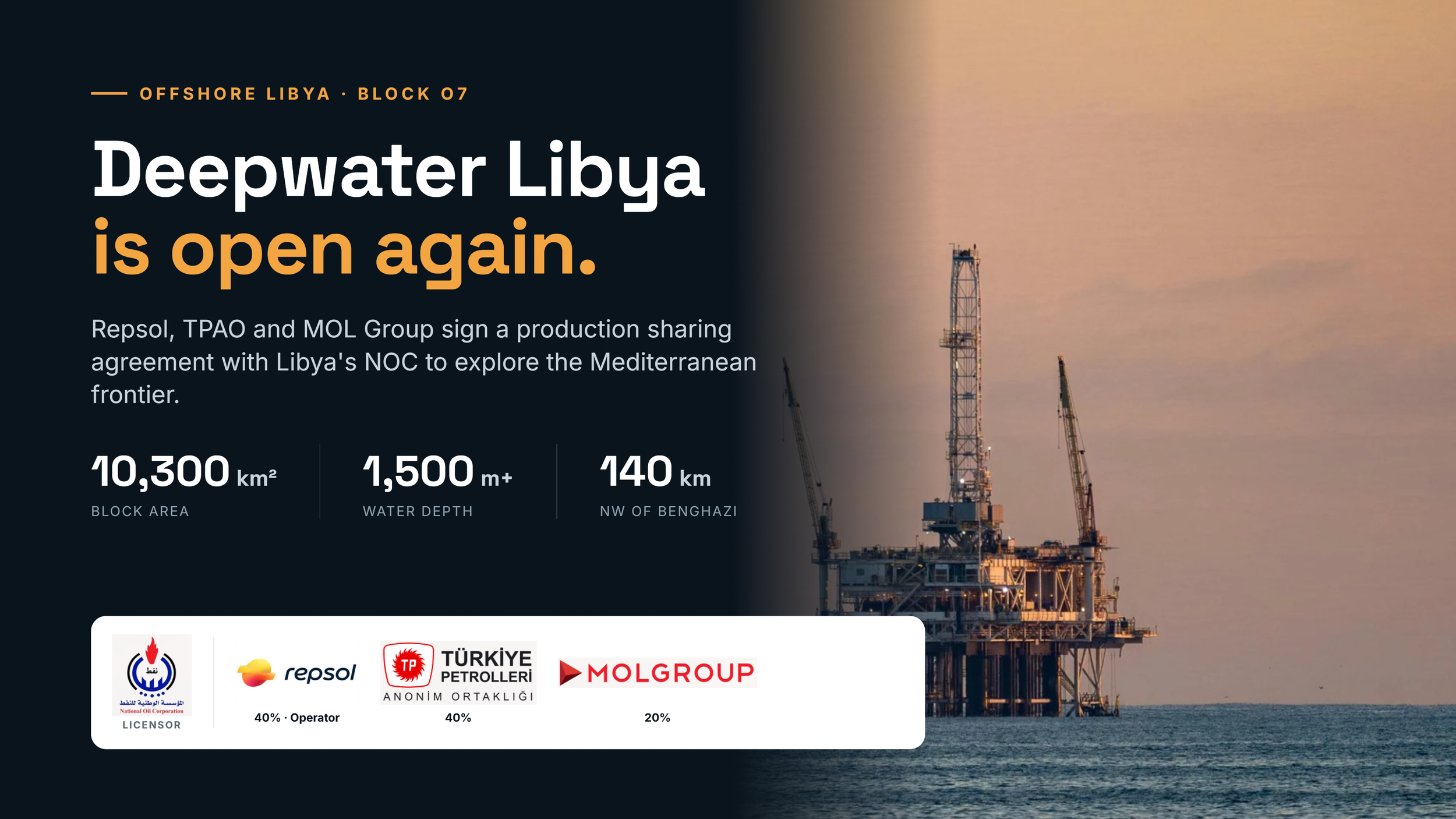
The programme includes a 3D seismic survey covering 2,676 square kilometres and a 2D survey spanning 1,500 line kilometres. Block 22, listed as Offshore Area O7 in the NOC’s licensing documents, covers more than 10,300 square kilometres in the offshore Sirte Basin. It lies about 140 kilometres northwest of Benghazi, in waters reaching depths of 2,000 metres, according to the NOC.
First 3D seismic survey for Block 22
The NOC’s bid-round documents list about 1,704 line kilometres of existing 2D seismic data for Block 22 and record no previous 3D survey or wells in the area. The proposed 3D survey would cover roughly a quarter of the block, giving the consortium a more detailed picture of the rock formations beneath the seabed. The 2D survey would provide additional cross-sections to help geologists trace those formations across the block.
The proposed 3D survey exceeds the consortium’s minimum commitment by 376 square kilometres. MOL disclosed in June that the partners had committed to acquiring at least 2,300 square kilometres of 3D data and 1,500 line kilometres of 2D data, as well as drilling one exploration well. The November update gave a start window for the seismic surveys. Timing for the well remains open.
Libya’s licensing round moves into the work programme
The NOC announced the results of Libya’s first oil and gas licensing round since 2007 in February 2026. The three partners signed a production-sharing agreement in June. Repsol operates the block with a 40% stake, while TPAO holds 40% and MOL holds 20%.
The NOC said the November meeting was part of its oversight of offshore exploration and its efforts to work with international operators to expand Libya’s oil and gas reserves. Once the surveys are complete, the partners can use the data to rank prospective drilling targets. The exploration well will give them their first direct evidence of the rock and fluid conditions at the selected site.
