
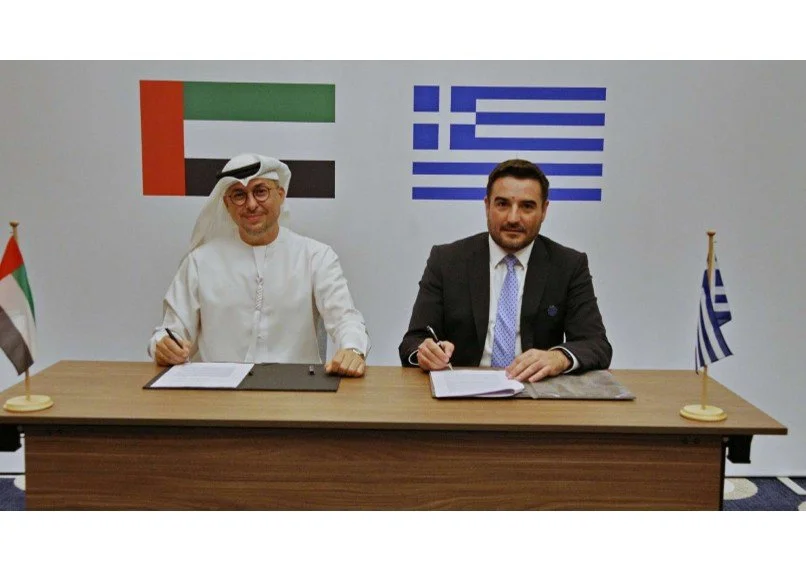
Abu Dhabi Future Energy Company (Masdar) has signed an agreement to acquire and develop one of Greece’s largest solar photovoltaic projects, with a capacity exceeding 550 megawatts (MW), marking a significant expansion of the UAE-based renewable energy company’s presence in Southeastern Europe.
The project, which is being acquired from Lightsource bp, is expected to become operational by the end of 2026 and generate enough electricity to power more than 200,000 homes annually. The investment is intended to strengthen Greece’s renewable energy infrastructure, enhance energy security, and support the country’s ambitions to establish itself as a regional hub for artificial intelligence (AI), cloud computing, and digital infrastructure.
The agreement was announced during the official visit of H.H. Sheikh Khaled bin Mohamed bin Zayed Al Nahyan, Crown Prince of Abu Dhabi, to Greece, reflecting the expanding economic and strategic partnership between the United Arab Emirates and Greece as the two countries mark more than five decades of diplomatic relations.
The acquisition also represents Masdar’s first strategic investment through TERNA ENERGY following the completion of its acquisition of the Greek renewable energy company in April 2025.
Expanding Greece’s Renewable Energy Capacity
The solar photovoltaic project, with a planned capacity exceeding 550 MW, is among the largest solar developments in Greece and is expected to contribute significantly to the country’s electricity generation capacity.
Masdar intends to develop the project further by integrating battery energy storage systems, allowing renewable electricity to be stored and supplied when needed. The planned storage component is expected to improve grid flexibility, support electricity system stability, and facilitate greater integration of renewable energy into Greece’s national power network.
The transaction also includes two privately owned substations that will connect the solar development to the electricity transmission system, providing essential infrastructure for delivering generated electricity to the national grid.
The acquisition remains subject to regulatory approvals and customary closing conditions, with completion expected before the end of 2026.
The development comes as Greece continues to expand its renewable energy infrastructure and strengthen its position as an electricity exporter within Southeastern Europe. Investments in solar generation, wind power, energy storage, and transmission infrastructure are increasingly important to the country's efforts to diversify its energy mix and meet growing domestic and regional electricity demand.
Supporting Greece’s Ambitions as a European Digital Hub
Beyond expanding renewable electricity generation, the investment is closely linked to Greece’s ambitions to become a regional center for digital infrastructure and advanced technology.
The rapid expansion of artificial intelligence, cloud computing, and data-intensive industries is creating additional demand for reliable and competitively priced electricity. As governments and technology companies invest in new data centers, access to renewable energy is becoming an increasingly important factor in determining where major digital infrastructure projects are developed.
Greece’s geographical position at the intersection of Europe, Asia, and Africa provides opportunities to serve as a regional connectivity and technology hub.
Masdar’s proposed solar investment is intended to help meet the electricity requirements associated with this transformation while supporting the country’s energy transition objectives.
The project could also contribute to attracting additional investment in energy-intensive industries by expanding the availability of renewable electricity and supporting the development of infrastructure capable of meeting future demand.
Masdar and Khazna Data Centers Sign Green Infrastructure Agreement
Alongside the solar acquisition, Masdar and Khazna Data Centers signed a Memorandum of Understanding (MoU) to explore opportunities for developing green data center infrastructure in Greece.
The agreement brings together Masdar’s expertise in renewable energy generation and battery storage with Khazna’s experience in data center development and operations.
Under the proposed collaboration, the companies will explore dedicated clean electricity generation and storage solutions to support the growing energy requirements of Greece’s digital economy.
The initiative is intended to create opportunities for investment in data centers powered by renewable energy, potentially strengthening Greece’s competitiveness as a destination for international technology companies and digital infrastructure operators.
The collaboration also reflects a broader trend toward closer integration between renewable energy development and digital infrastructure investment.
As demand for AI computing and cloud services increases, electricity supply, grid capacity, and energy efficiency are becoming central considerations for data center developers.
By combining renewable electricity generation with advanced digital infrastructure, Masdar and Khazna aim to support the development of an integrated energy and technology ecosystem in Greece.
UAE–Greece Strategic Partnership Enters a New Phase
The agreements highlight the expanding scope of cooperation between the UAE and Greece across energy, investment, artificial intelligence, and advanced technology.
The UAE has increasingly positioned renewable energy and international infrastructure investment as important components of its economic diversification strategy, while Greece continues to attract international investment in energy, logistics, and technology.
H.E. Dr. Sultan Ahmed Al Jaber, UAE Minister of Industry and Advanced Technology and Chairman of Masdar, emphasized the importance of reliable and affordable energy in supporting the next phase of global economic development.
According to Al Jaber, the growing adoption of artificial intelligence and other digital technologies is making dependable electricity supplies increasingly important for economic competitiveness.
He highlighted the combination of Masdar’s renewable energy portfolio and its collaboration with Khazna as an opportunity to connect clean electricity generation with the infrastructure requirements of the digital economy.
The agreements are also expected to contribute to Greece’s energy security and support the development of new investment opportunities across the renewable energy and technology sectors.
The announcement comes as the UAE and Greece continue to deepen bilateral economic cooperation, building on more than 50 years of diplomatic relations.
Building on Masdar’s Acquisition of TERNA ENERGY
The latest investment follows Masdar’s acquisition of TERNA ENERGY, one of Greece’s established renewable energy developers.
Masdar initially acquired a 70% stake in TERNA ENERGY in November 2024, in a transaction that valued the Greek company at approximately €3.2 billion.
The company subsequently completed its acquisition of the remaining shares in April 2025, securing full ownership of TERNA ENERGY and establishing a platform for expansion across Southeastern and Central Europe.
The acquisition represented a major milestone in Masdar’s European investment strategy and provided the company with an established portfolio of renewable energy assets, development projects, and operational expertise.
TERNA ENERGY is now serving as Masdar’s regional growth platform, with plans to achieve 6 gigawatts (GW) of operational renewable energy capacity by 2030, supported by an investment program valued at approximately €5.5 billion.
The proposed 550+ MW solar acquisition will complement TERNA ENERGY’s existing portfolio and is expected to generate operational and commercial synergies across the group’s renewable energy activities.
The project will also expand Masdar’s exposure to the Greek electricity market and strengthen its position in Southeastern Europe, where investment in renewable generation, electricity storage, and cross-border energy infrastructure continues to develop.
Mohamed Jameel Al Ramahi, Chief Executive Officer of Masdar, described the agreements as another milestone in the company’s European growth strategy.
He highlighted the importance of expanding Masdar’s renewable energy portfolio with high-quality assets while integrating battery storage to enhance project performance and deliver long-term value.
Al Ramahi also emphasized the potential of the Khazna collaboration to support Greece’s expanding digital economy through renewable electricity solutions.
Battery Storage to Strengthen Electricity Grid Stability
A central component of Masdar’s development strategy for the solar project is the planned integration of battery energy storage.
As renewable energy capacity expands, electricity systems must manage fluctuations in generation caused by changing weather conditions and variations in electricity demand.
Battery storage can help address these challenges by storing excess solar electricity during periods of high generation and releasing it when production declines or demand increases.
For Greece, additional storage capacity could support the continued expansion of renewable electricity generation while improving the flexibility and reliability of the national electricity system.
The planned integration also reflects the growing importance of combining solar photovoltaic installations with storage infrastructure rather than developing generation capacity alone.
Although Masdar has not disclosed the proposed battery storage capacity or the total value of the solar acquisition, the company has identified storage integration as an important element of the project's future development.
Masdar Targets 100 GW of Global Energy Capacity by 2030
The Greek solar acquisition forms part of Masdar’s broader international expansion strategy, which focuses on scaling renewable energy investments across established and emerging markets.
The company has developed a global renewable energy portfolio exceeding 65 GW in capacity, spanning solar photovoltaic projects, onshore and offshore wind, battery storage, and hybrid energy systems.
Masdar is targeting 100 GW of energy capacity by 2030, supported by investments in renewable electricity generation and energy infrastructure across multiple regions.
The company is also advancing large-scale renewable energy and storage developments in the UAE, including a gigascale project in Abu Dhabi designed to deliver continuous renewable electricity by combining solar generation with battery storage.
Such projects are intended to demonstrate how renewable energy technologies can increasingly support electricity systems requiring dependable, around-the-clock power supplies.
In Europe, Masdar’s strategy includes expanding its renewable energy platform through TERNA ENERGY while identifying additional opportunities in markets where demand for low-carbon electricity and energy storage is growing.
Strengthening the Connection Between Clean Energy and Digital Infrastructure
The latest agreements demonstrate the increasingly close relationship between renewable energy investment and the development of digital infrastructure.
With artificial intelligence, cloud computing, and advanced technologies driving electricity demand, countries seeking to attract major technology investments are placing greater emphasis on securing reliable energy supplies.
For Greece, the combination of a large-scale solar development and the proposed green data center collaboration could support the country’s efforts to strengthen its position in both the European energy market and the regional digital economy.
The initiatives also highlight the UAE’s expanding international investment footprint, particularly in sectors where energy, technology, and infrastructure development intersect.
Subject to regulatory approval and successful completion of the transaction, Masdar’s 550+ MW solar acquisition will represent another significant addition to Greece’s renewable energy pipeline and further consolidate the company’s long-term investment strategy in Southeastern Europe.
With planned battery storage integration, an expanding partnership with Khazna Data Centers, and TERNA ENERGY serving as its regional platform, Masdar is positioning itself to participate in the next phase of Greece’s energy and digital infrastructure development.
